THE SUPER CHEMISTRY
OF SOURDOUGH BAGELS!
Cooking is chemistry you can eat. Here's everything that happens — from a jar of bubbly starter to a glossy, blistered, golden-brown bagel — told as a superhero adventure.
Made for Sarah & Matthew — two 8th-grade chemists-in-training.
Baking day with Chef Léo.
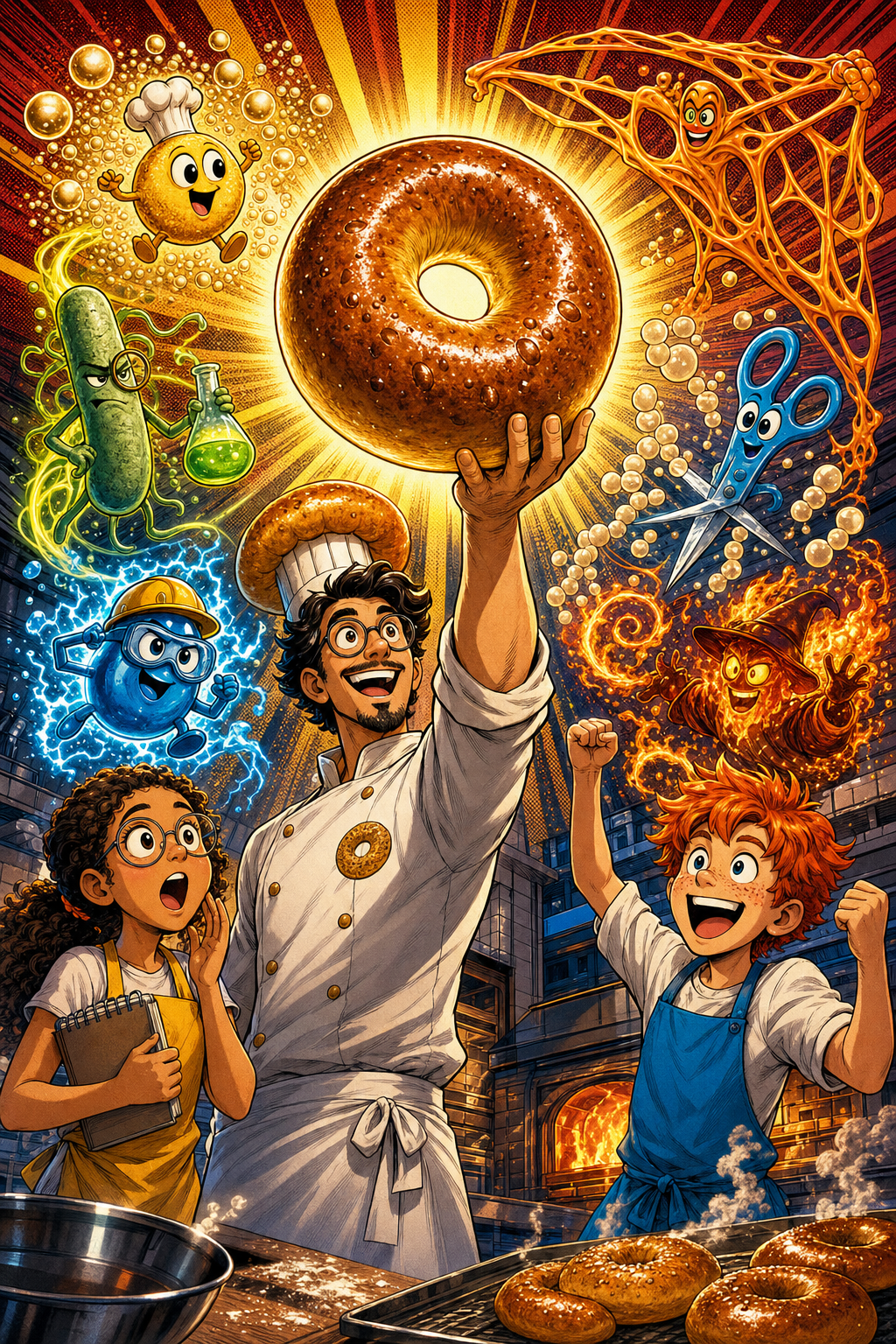
MEET THE HEROES!
Inside every sourdough bagel, a team of tiny heroes is hard at work. Say hello before the action begins.

YEASTIE
A wild yeast cell from the sourdough starter. Eats sugar, burps carbon dioxide gas, and puffs up the dough. The reason bread rises!
LACTO
A Lactobacillus bacterium. Makes lactic acid — that tangy sourdough taste — and keeps the dough safe by making it too acidic for bad microbes.
GLUTEN-NET
Two flour proteins (glutenin + gliadin) that link up when you knead with water, forming a stretchy web strong enough to trap Yeastie's bubbles.
AMYLASE
An enzyme (a tiny molecular machine) that snips long starch chains into short sugars — so the yeast always has something to eat.
MAILLARD
Named after the French scientist Louis-Camille Maillard. In a hot oven, sugars and proteins fuse into brown, aromatic, delicious crust.
LYE
Sodium hydroxide — a powerful alkali (base). Crank the boil's pH way up and the crust browns faster, glossier, and more flavorful. Wears a hard hat for a reason — handle with care!
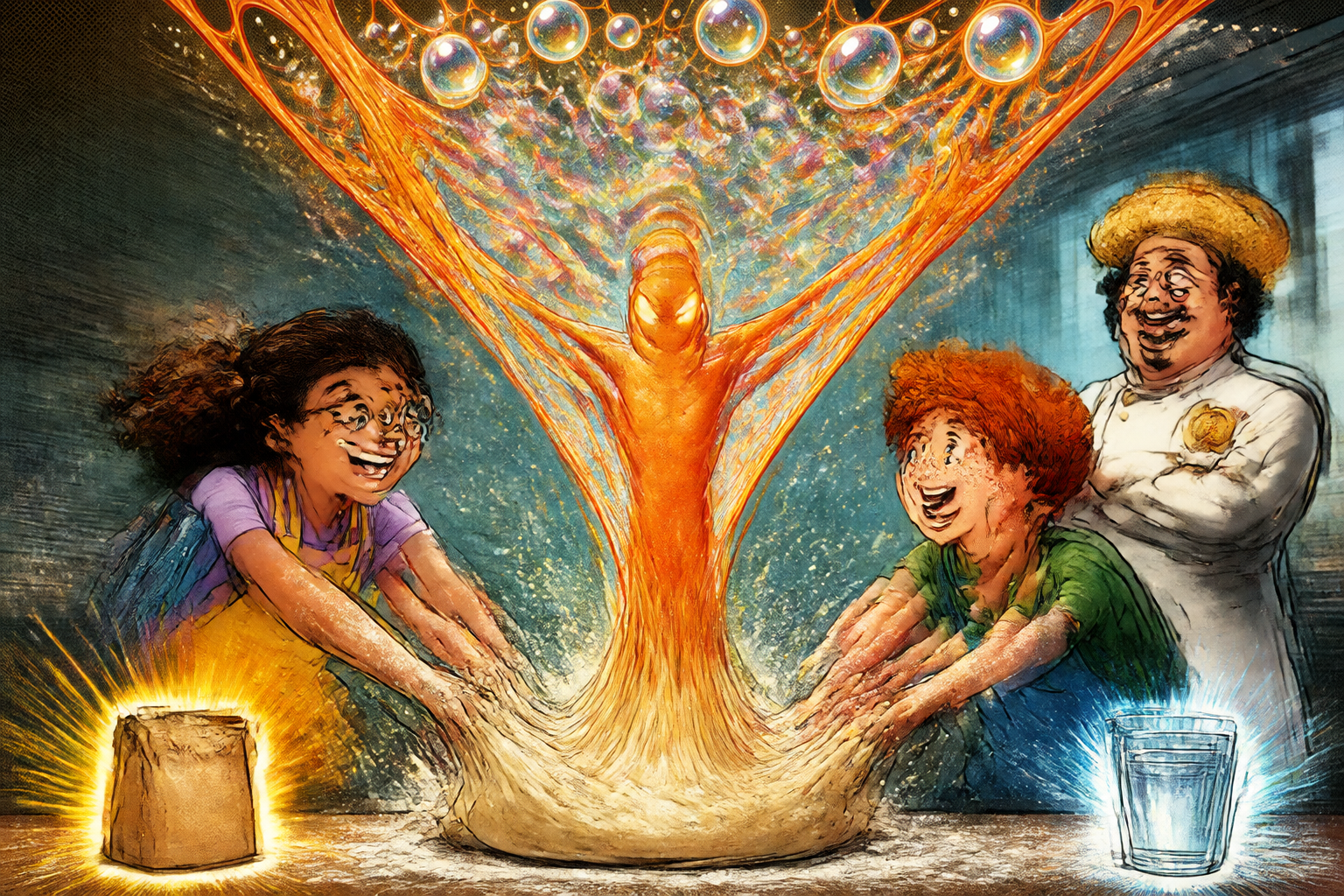
Building the Bubble Net
Flour is mostly starch — but hiding inside it are two proteins: glutenin and gliadin.
Proteins + Water = Elastic Web
Glutenin gives the net its strength (it can stretch and snap back). Gliadin gives it stretchiness (it flows). Together they form a viscoelastic network — strong and stretchy — that traps the CO₂ gas the yeast produces. That's why high-protein bread flour (12–14% protein) makes taller, chewier bagels than all-purpose flour.
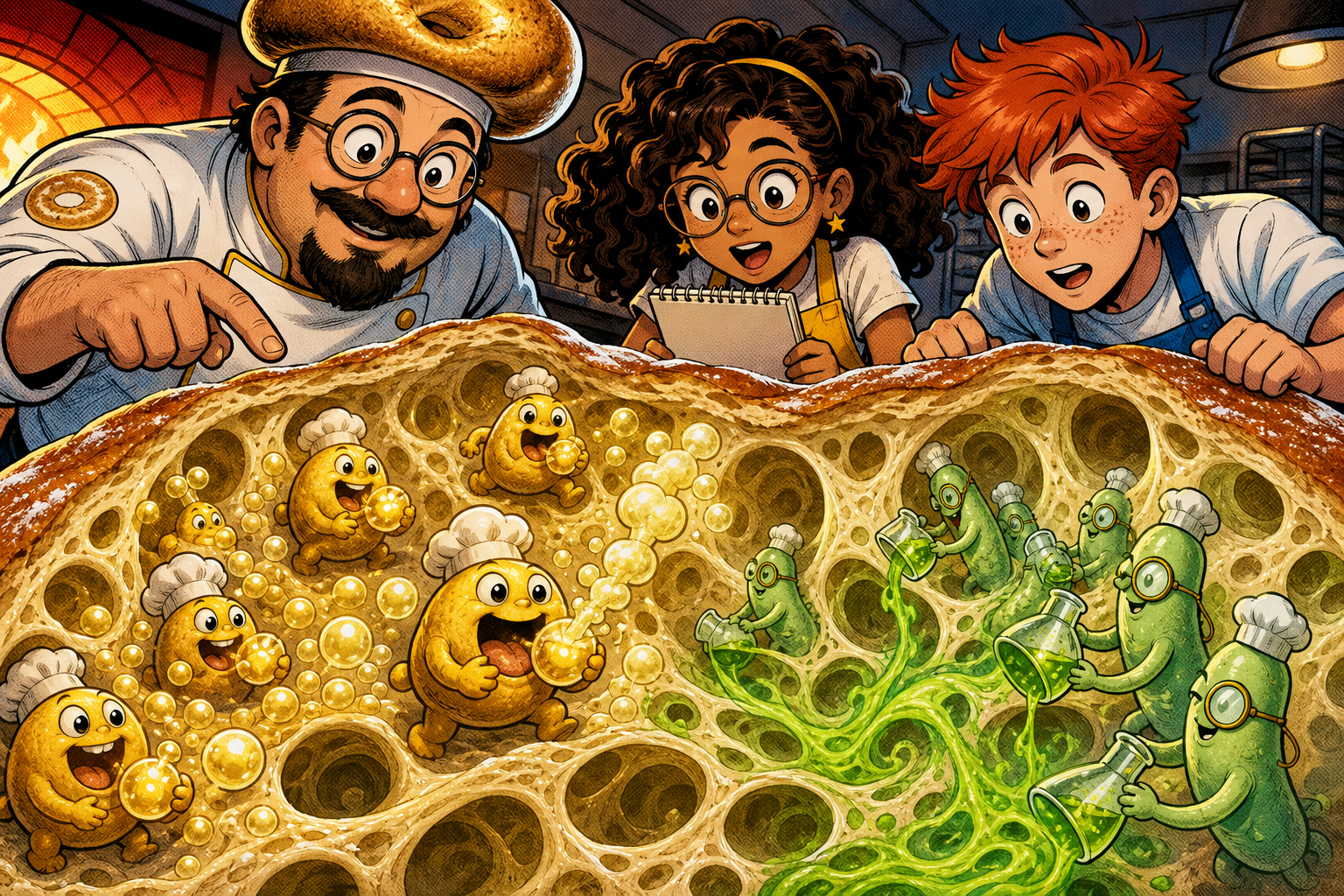
The Wild Yeast Party
Sourdough isn't made with little packets of baker's yeast. It's a wild culture — a living team of yeast and bacteria, kept alive in a jar of flour and water called a starter.
Two Best Friends, Two Jobs
Wild yeast (Saccharomyces & friends) ferments sugar and releases carbon dioxide gas — the bubbles that make dough rise:
Lactic acid bacteria (Lactobacillus) ferment sugar a different way and make lactic acid — the sour taste. The acid also does three bonus jobs: it toughens the gluten, helps the crust brown beautifully in the oven, and makes the dough slightly acidic so bad bacteria can't take over.
Together they're the sourdough ecosystem — a tiny, edible partnership.
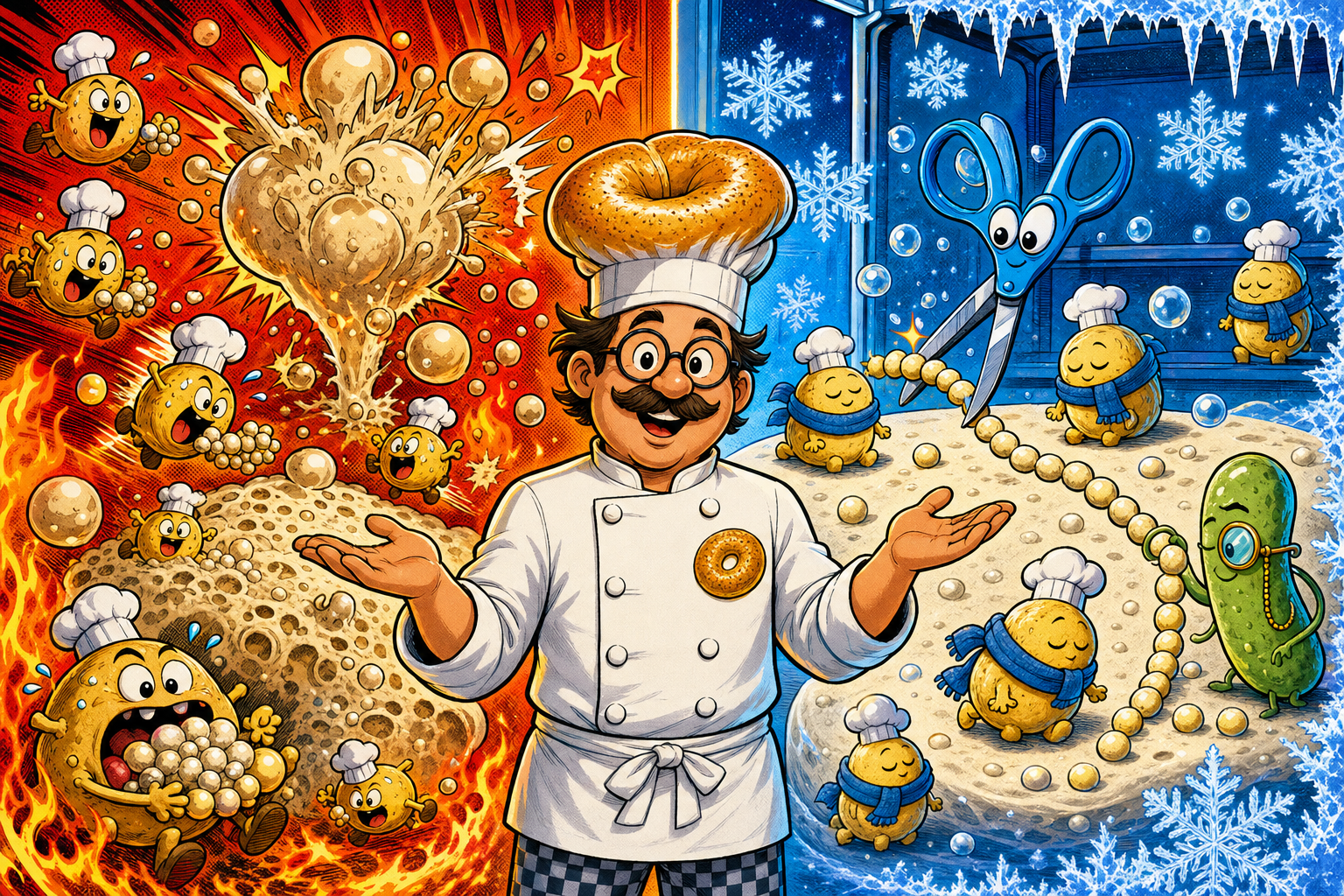
The Great Rise-Off: Cold vs. Warm
Here's a secret: temperature controls everything. Warm the dough and the microbes sprint. Chill it and they slow to a crawl. We're going to chill it. Why?
Why the Fridge Wins (For Flavor)
Temperature is basically the speed dial for every chemical reaction. Rough rule: reactions run about 2× faster for every 10°C warmer.
- Warm rise (~26°C / 79°F): Yeast zooms. Gas explodes fast and messy → big irregular holes → mild flavor. Fine for quick bread, sad for bagels.
- Cold "retard" in the fridge (~4°C / 39°F): Yeast slows way down. But the flavor-making enzymes and bacteria keep working steadily. Over a long, slow night they build hundreds of aromatic molecules. Small, even gas bubbles form. Result: deep flavor + tight, chewy crumb.
This is called a cold retard or cold proof, and it's why we shape the bagels tonight and bake them tomorrow.
The Night Shift: Starch → Sugar
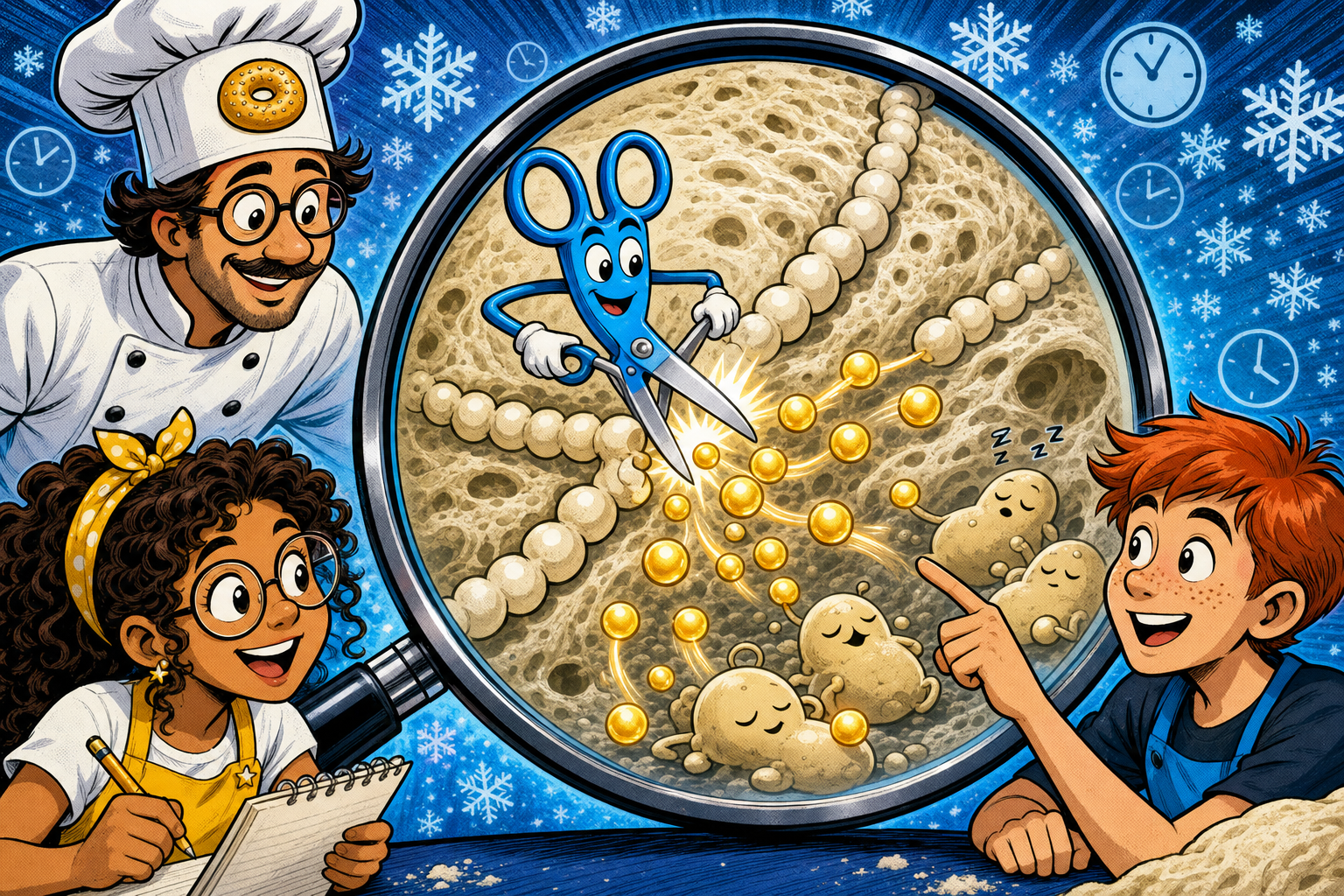
Yeast can't bite into a giant starch molecule. It needs small sugar. Enter amylase — the molecular scissors working the night shift while the dough chills.
Scissors for Starch
Starch is a long chain of glucose sugar molecules stuck together — like a pearl necklace. The yeast can only eat single "pearls." Amylase (an enzyme that occurs naturally in flour, and is boosted by the diastatic malt in the recipe) snips those chains:
This is the same enzyme in your saliva! Chew a cracker for a long time and it starts to taste sweet — that's amylase in your mouth doing the same job. In the cold fridge this snipping goes slowly, which is exactly why a long cold retard builds more fermentable sugar — and more flavor — than a quick warm rise.
The Boil: Lye & Malt Syrup
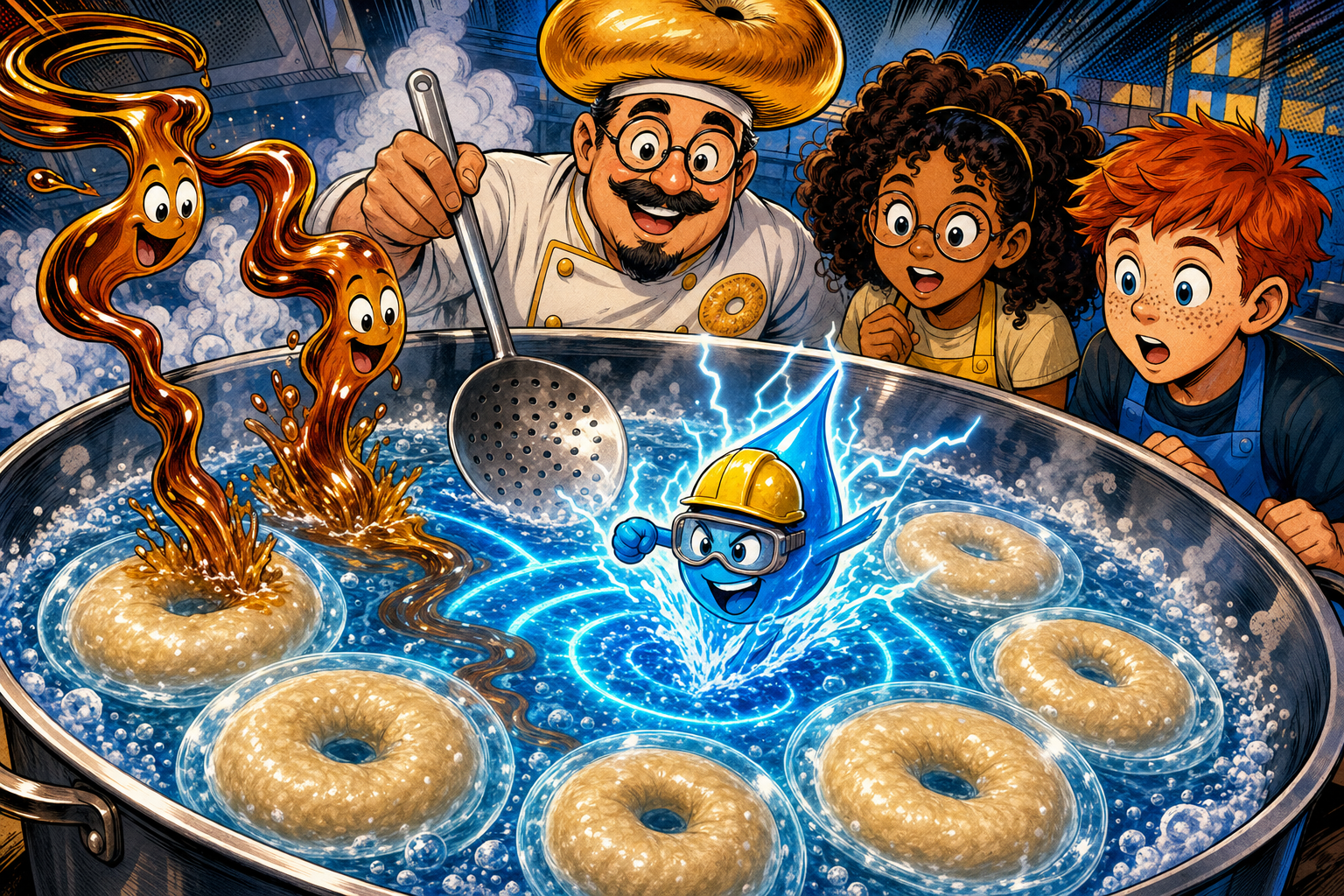
Here's where bagels get weird and wonderful — and where the real chemistry magic happens. Before baking, we drop the shaped bagels into boiling water with two special ingredients: barley malt syrup and a tiny bit of lye.
Three Reactions in the Pot
① Starch gelatinization. Hot water hits the surface starch and it swells, bursts, and gels — forming a thin glossy coating. That gel is what turns into the chewy, shiny crust in the oven.
② Barley malt syrup = sugar + color fuel. The syrup is full of maltose sugar (made by — you guessed it — amylase digesting barley!). It gives the yeast extra food AND feeds the browning reaction. It also adds a toasty, slightly sweet, malty flavor.
③ Lye raises the pH — and that's the superpower. Lye is sodium hydroxide (NaOH), a powerful base. Pure water is pH 7 (neutral). A tiny amount of lye pushes the boil up to about pH 11–13. At that high pH:
- More sugars react with proteins during baking → faster, deeper browning.
- The crust gets glossier, crisper, and more deeply flavored — slightly pretzel-like.
- The famous "blistered" crust of a great bagel? The alkaline water helps those little bubbles form.
Don't worry — the lye reacts away in the oven. The finished bagel is totally safe to eat. (It's the same chemistry used to make soft pretzels glossy and brown.)
Into the Oven: Maillard's Magic
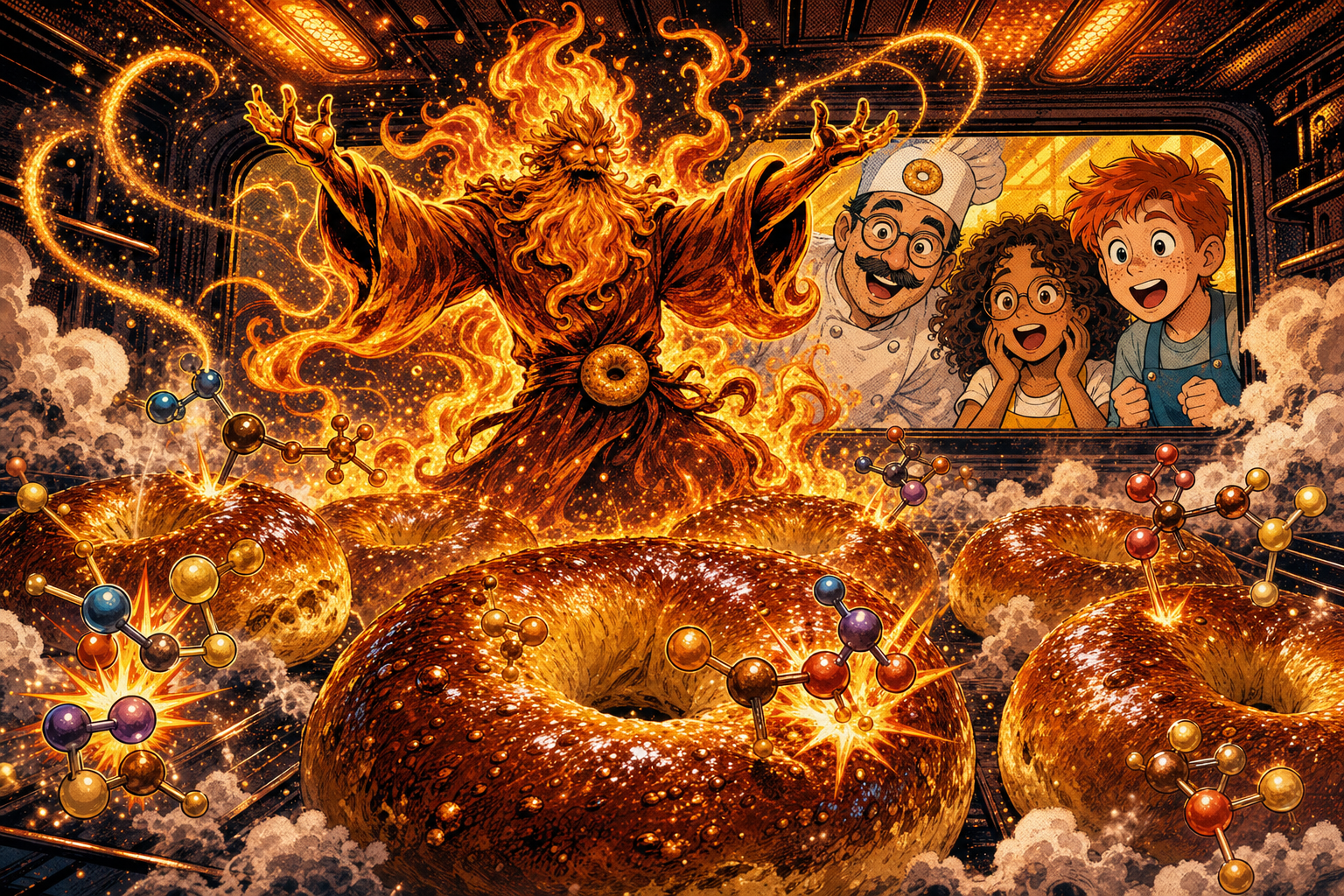
Now the bagels hit a 500°F steel. Two big reactions fire up — and this is where raw dough becomes food.
Two Reactions Make the Crust
① The Maillard reaction (starts ~280°F / 140°C). Sugars react with amino acids (the building blocks of proteins) in the hot, dry surface of the dough. They fuse into hundreds of new brown, aromatic molecules — melanoidins (the color) and pyrazines & furans (the toasty smell). This is why the crust turns mahogany and fills the kitchen with that bread smell. And remember — the alkaline lye from the boil made this reaction faster and deeper.
② Caramelization (starts ~320°F / 160°C). As the surface gets hotter, plain sugars themselves break apart and re-form into complex golden-brown caramel molecules — adding sweet, nutty notes on top of the Maillard flavors.
③ Bonus — oven spring + blisters. The instant blast of heat makes the trapped CO₂ gas and water vapor expand violently — the bagels puff up one last time (oven spring). Because we boiled them, the gelled surface stretches instead of cracking, and the steam trapped under the gel forms those beautiful shiny blisters.

Bagels: Assembled! ✦
So here's the whole adventure, end to end:
🟠 Knead water into flour → gluten web forms.
🟡 Wild yeast eats sugar (made by 🔵 amylase scissors) → burps CO₂, caught by the net.
🟢 Lacto makes lactic acid → sourdough flavor.
❄️ Cold overnight retard → slow, even bubbles + deep flavor + more sugar unlocked.
🫧 Boil in malt syrup + 💧 lye → gelled glossy shell + high-pH superpower.
🔴 Hot oven → Maillard + caramelization → mahogany crust, blisters, aroma. Oven spring puff.
✦ EAT.
⚠️ LYE SAFETY — READ THIS PART TOGETHER
Lye (sodium hydroxide) is a real chemical and it deserves respect. It's safe to use when you follow the rules:
- 📏 Measure exactly the amount the recipe calls for — never "a little extra."
- 🧤 Wear gloves and safety goggles. Splash is the main risk.
- 🪣 Add lye to water, never water to lye — it can splash and heat up fast.
- 🚫 Keep it away from your eyes, skin, and mouth. If it touches skin, rinse with plenty of cool water right away.
- 🍽️ Only use it for the short boil. By the time the bagels come out of the oven, the lye has fully reacted and the finished bagels are completely safe to eat.
- 🐣 Scared of lye? The original recipe uses plain baking soda instead — same idea, much milder. Start there if you like. The chemistry is the same, just gentler.